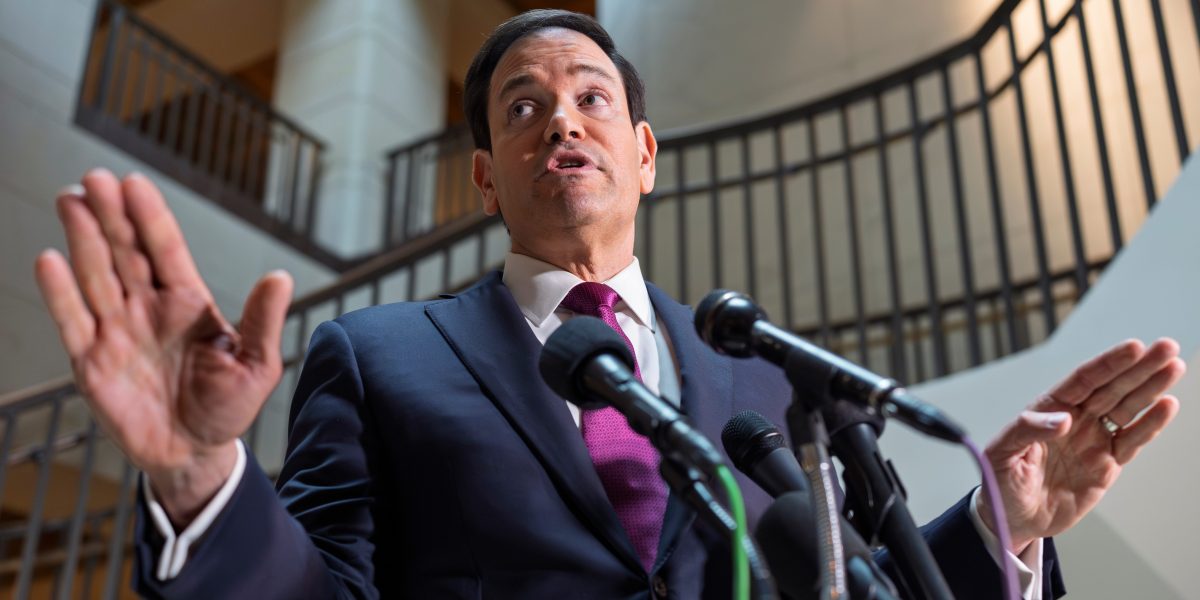
The intricate dance of international diplomacy and military strategy often gives rise to public statements that, while intended to clarify, can inadvertently ignite fierce debate. Such was the case with Secretary of State Marco Rubio's initial rubio war remarks concerning U.S. military action against Iran. These comments triggered a significant backlash, particularly within the "America First" wing of the MAGA movement, and raised critical questions about the nature of U.S.-Israel coordination. This article delves into the reality behind these claims, dissecting Rubio's statements, his subsequent clarifications, and the deeper strategic realities that often remain unseen beneath the surface of political discourse.
The Initial Firestorm: Interpreting Rubio's Iran War Remarks
In the wake of U.S. military strikes against Iran, then-Secretary of State Marco Rubio found himself at the center of a political maelstrom. His initial statements, made during a briefing on Capitol Hill, were widely interpreted as suggesting Israel played a primary role in drawing the United States into the conflict. Rubio stated, "We knew that there was going to be an Israeli action" against Iran, and continued, "if we didn't preemptively go after them before they launched those attacks, we would suffer higher casualties... And then we would all be here answering questions about why we knew that and didn't act."
The immediate translation by many, including frustrated pro-Trump influencers and the "America First" contingent, was that the U.S. felt compelled to strike Iran because it couldn't stop its ally, Israel, from acting. This narrative quickly gained traction, portraying the U.S. as subordinate to Israel's interests – a powerful and controversial claim, especially at a time when American public support for Israel was registering historic lows. This interpretation fueled long-standing resentments among some conservative factions who argue against what they perceive as undue foreign entanglements, accusing the Trump administration of succumbing to "military hawks" and "neocons" rather than adhering to an "America First" approach.
The impact of these initial Rubio's War Remarks Ignite MAGA's Israel Divide on Iran was profound. It not only exacerbated existing divisions within the Republican base but also provided perceived vindication for anti-Israel voices and, concerningly, openly antisemitic influencers who had been attempting to gain mainstream traction. The incident highlighted the precarious balance of communication during military operations and the diverse ways in which official statements can be consumed and weaponized across the political spectrum.
Why the Messaging Muddled?
The ambiguity wasn't entirely surprising. Prior to Rubio's remarks, administration officials had offered shifting explanations for the strikes, initially claiming Iran was preparing to attack American forces without substantial intelligence backing that public claim. What was often omitted in those early briefings was the crucial context: Iran was preparing to retaliate because Israel was about to strike first. This complex sequence of events made clear, consistent messaging a significant challenge, creating an environment ripe for misinterpretation.
Rubio's Clarification: Asserting Trump's Decisive Role
Recognizing the political fallout and the widespread misinterpretation, Secretary Rubio swiftly moved to clarify his position. In subsequent statements, he adamantly rejected the notion that Israel had dragged the U.S. into war, unequivocally stating that the decision to strike Iran rested squarely with President Donald Trump. "The President made the decision to go after them, take away their missiles, take away their navy, take away their drones, take away their ability to make those things, so that they can never have a nuclear weapon," Rubio explained.
This clarification emphasized that Trump's decision was rooted in a broader U.S. strategic assessment of Iran's actions and capabilities, independent of — though perhaps influenced by — Israeli concerns. According to Rubio's revised narrative, the strikes were necessary because Iran was negotiating a nuclear deal in bad faith, rapidly developing missiles, and actively rebuilding its nuclear capabilities. The U.S., therefore, had its own compelling reasons to destroy Iran's offensive military infrastructure and prevent its path to a nuclear weapon.
For more details on this shift in narrative, refer to Rubio Clarifies Iran War Stance: Was Israel to Blame?. This recalibration of the official message underscored the importance of clear, consistent communication in foreign policy, particularly when dealing with sensitive geopolitical issues. It aimed to redirect the narrative from one of U.S. subordination to Israel to one of sovereign decision-making driven by American strategic interests.
Beyond Blame: The Reality of U.S.-Israel Coordination
While the initial rubio war remarks painted a picture of the U.S. reluctantly being pulled into conflict by a smaller ally, the reality of U.S.-Israel relations, especially regarding Iran, is far more nuanced and deeply coordinated. The idea of Israel acting completely unilaterally in such a major military operation without U.S. knowledge or approval is highly improbable, if not impossible. Decades of strategic partnership, intelligence sharing, and military aid have forged an intricate web of cooperation and mutual dependency.
A Deeply Intertwined Alliance
U.S. and Israeli officials confirmed that there was extensive coordination between the two countries in the weeks leading up to the strike. Israeli Prime Minister Benjamin Netanyahu had, in fact, been advocating for a U.S. strike against Iran since December. However, Israeli officials themselves indicated that Netanyahu would not have moved forward with any significant action against Iran without explicit approval, or at the very least, a "green light" from the Trump administration. This suggests a consultation process where Israel might press for action, but the ultimate decision for a U.S. response remains firmly with the American president.
Practical Insight: The 'Special Relationship' Dynamic
The "special relationship" between the U.S. and Israel means that actions by one nation almost invariably have implications for the other. This isn't a relationship of one country being subordinate to another, but rather a complex partnership where:
- Intelligence Sharing: Both nations extensively share intelligence regarding threats in the Middle East, particularly from Iran.
- Military Aid and Cooperation: The U.S. provides substantial military aid to Israel, alongside joint military exercises and technological collaboration. This intertwines their defense capabilities.
- Strategic Alignment: Despite occasional disagreements, both countries generally share a strategic alignment on key regional threats, especially Iran's nuclear ambitions and its destabilizing activities.
Therefore, the narrative of the U.S. being "dragged" into conflict by Israel obscures the deeper, more complex reality of two allies consulting, strategizing, and often, converging on a course of action that serves both their perceived national interests. U.S. officials explicitly stated that regardless of Israel's direct actions, Trump had his own strategic reasons for ordering the strikes against Iran, focusing on the destruction of its offensive capabilities and halting its nuclear program.
Navigating the Geopolitical Maze: Key Takeaways
The controversy surrounding rubio war remarks serves as a powerful illustration of the complexities inherent in modern foreign policy and international relations. It highlights several critical points:
- The Nuance of Alliances: Alliances like that between the U.S. and Israel are not always straightforward. They involve constant communication, negotiation, and a delicate balance of shared interests versus individual national priorities.
- The Power of Public Perception: How official statements are framed and interpreted can have profound domestic and international consequences, shaping public opinion and fueling political divides.
- Multi-layered Motivations: Major military actions are rarely driven by a single factor. They are typically the result of multifaceted strategic considerations, threat assessments, and geopolitical calculations.
- The Challenge of Messaging: In an age of instant information and often partisan media, maintaining a clear, consistent, and factual narrative during times of crisis is an immense challenge for any administration.
Understanding these dynamics requires looking beyond immediate soundbites and delving into the underlying diplomatic coordination, strategic rationale, and domestic political pressures that shape foreign policy decisions.
Conclusion
The initial Rubio war remarks regarding U.S. action against Iran opened a window into the often-misunderstood complexities of international alliances and foreign policy communication. While his comments sparked an intense debate about U.S. autonomy versus Israeli influence, subsequent clarifications and insider accounts reveal a more intricate picture of deep coordination between two strategic allies. Ultimately, President Trump's decision to strike Iran was presented as an assertion of U.S. strategic interests, aimed at countering Iran's nuclear and military ambitions, rather than merely a reluctant response to Israeli pressure. This episode underscores the critical need for precise communication in geopolitics and reminds us that beneath the surface of political controversy often lies a far more nuanced reality of international collaboration and strategic decision-making.